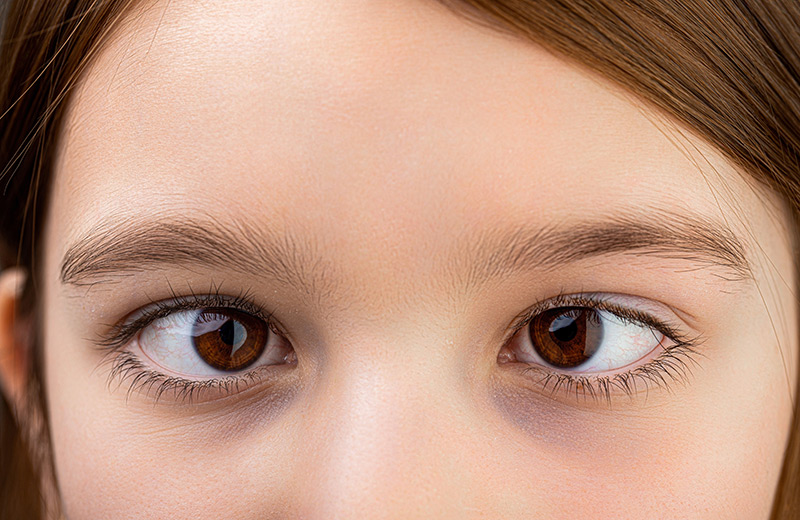

Does one of your child’s eyes sometimes appear to turn, yet look straight at other times? When an eye turn is not consistently visible, it can be difficult to tell whether your child has an intermittent eye alignment problem or whether the eyes only appear misaligned because of the angle or position from which you are viewing them.
Intermittent strabismus occurs when the eyes are misaligned at some times but appear aligned at others. The deviation may become more noticeable when a child is tired, unwell, daydreaming or looking at certain distances. If you repeatedly notice an eye turning, an eye examination can help determine whether there is a genuine alignment problem.
Why Does Strabismus Appear More Obvious at Certain Times?
Intermittent strabismus may become more noticeable when a child has more difficulty maintaining control of their eye alignment. The frequency and visibility of an eye turn can vary depending on the type of strabismus.
You may notice the eye turn more often when your child is:
- Tired or unwell
- Daydreaming
- Looking at distant objects
- Exposed to bright sunlight
Signs That Warrant an Eye Assessment
Not every brief change in how your child’s eyes appear will indicate a problem. However, certain patterns or changes in visual behaviour can make an eye assessment more important, even if the misalignment is not present all the time.
Consider arranging an assessment if:
- The eye turn is becoming more frequent or pronounced
- One eye consistently appears to be the eye that turns
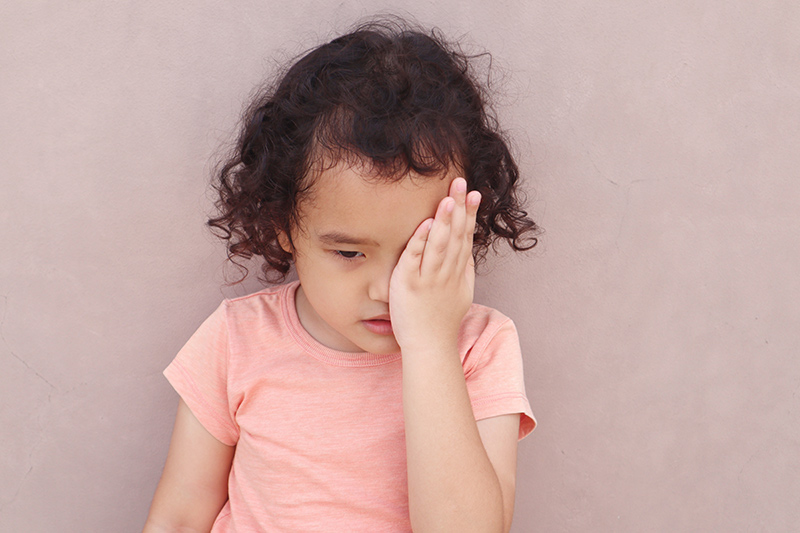
- Your child closes or covers one eye to see
- Your child frequently tilts or turns their head
- They report double vision or difficulty seeing
- You have concerns about vision in either eye
A sudden new eye turn should be assessed promptly, particularly if it occurs alongside double vision, unusual eye movements, headaches or other neurological symptoms.
What Happens During a Strabismus Assessment?
A strabismus assessment looks at your child’s eye alignment, vision and how effectively both eyes work together. Depending on your child’s age and symptoms, it may include:
- Medical and family history: Identifies relevant health factors, previous eye concerns and any family history of strabismus or other eye conditions.
- Eye movement testing: Assesses how the eyes move individually and together in different directions.
- Depth perception assessment: Evaluates how effectively both eyes work together to judge distance and depth.
- Alignment measurements: Prism tests can measure the direction and degree of eye misalignment.
- Dilated eye examination: Eye drops may be used to widen the pupils so the internal structures of the eyes can be examined more closely.
- Screening for related conditions: Your child may also be checked for amblyopia, commonly known as lazy eye, and refractive errors such as long-sightedness, short-sightedness or astigmatism.
Together, these findings help the strabismus specialist establish how your child’s eyes are aligning and functioning, which can guide the next steps in their care.
Getting Clarity About Your Child’s Eye Alignment
When an eye turn is only visible from time to time, it can be tempting to keep watching and wait for a clearer pattern to emerge. However, you do not need to be certain that your child has strabismus before seeking an opinion. A review can provide clarity when what you are seeing at home remains difficult to interpret.
At Dr Leo Adult & Paediatric Eye Specialist Clinic in Singapore, Dr Leo Seo Wei provides assessment and care for children with strabismus and other eye conditions. With over 20 years of clinical experience, she tailors management to each child’s visual needs using established and appropriate treatment approaches.
If you have repeatedly noticed that your child’s eyes do not appear aligned, schedule a consultation for a comprehensive eye examination and personalised recommendations.
FAQs About Intermittent Strabismus in Children
Should I record my child’s eye turn before the appointment?
Yes, a clear photograph or short video can be helpful if the misalignment does not occur during the consultation. Try to capture the eyes from the front without deliberately asking your child to change their gaze. Your eye specialist will still perform a clinical assessment.
Does having a family history of strabismus matter?
Strabismus can occur more frequently in children with a family history of the condition. Tell your eye specialist if a parent or sibling has had strabismus, amblyopia or significant childhood vision problems as this provides useful clinical context.
Can intermittent strabismus become constant?
In some children, control of an intermittent eye turn may change over time and the deviation can become more frequent. Regular monitoring allows an eye specialist to assess whether control is deteriorating and whether management needs to change.
Is surgery always needed for strabismus in children?
Not necessarily. Milder cases may be managed with spectacles, eye patches or lifestyle changes to address refractive errors and support the weaker eye. Surgery may be considered depending on the type and severity of the misalignment.