
Implantable Contact Lenses(ICL)
Seeking A Safe & Effective Alternative To LASIK?

- You Don’t Want Something Clunky On Your Face
- You Want a Low Maintenance Option
- You Want a More Hygienic Option
- You Want a More Comfortable Option
- You Have Severe Myopia or Hyperopia
- You Have Severe Astigmatism
- You Are Not Comfortable Removing Corneal Tissue
- Dry Eyes
- Night Vision Glares & Halos
- Permanence In Spite of Future Vision Changes
Book your ICL consultation in Singapore today and take the first step towards clearer vision.
Get in touch
Book an ICL consultation
Let our team of optometrists screen and determine what vision problems you may have.
Determine Suitability
Depending on your results and preferences, we will let you know if the ICL is a recommended option for you. If you’re a suitable candidate, we’ll walk you through how ICL surgery works, explain each step of the procedure and answer any questions you may have about recovery and aftercare.
Clear Vision
After the ICL Surgery, you will obtain clear vision both during the day and night. As a bonus, it is comfortable, reversible and requires no special maintenance.
Benefits of Implantable Collamer Lenses (ICL)
Reversible and Removable
When necessary, Implantable Collamer Lenses (ICL) can be replaced or removed. This offers flexibility should your vision needs change in the future.
Protection from UV rays
ICL lenses are designed with built-in ultraviolet (UV) protection that helps filter harmful UV light before it reaches the eye. This may help reduce the long-term effects of UV exposure on internal eye structures.
Fast Recovery
Most patients experience relatively quick visual recovery after ICL surgery. Vision often improves within a few days, allowing many individuals to return to normal daily activities sooner compared to some other corrective procedures.
Suitable for High Myopia and Thin Corneas
ICL may be a suitable option for individuals with high levels of myopia (severe short-sightedness) or those with thin corneas who may not be ideal candidates for laser vision correction procedures such as LASIK or PRK.
Minimal Dry Eyes and Glare Risk
Because ICL surgery does not involve reshaping the cornea, it generally causes less disruption to the eye’s surface nerves. As a result, patients may experience a lower risk of dry eye symptoms or glare compared to certain laser-based vision correction procedures.
Offers Clearer Night Vision
ICL lenses are designed to provide high-quality optical clarity, which may help improve vision in low-light conditions. Some patients report clearer night vision with fewer visual disturbances such as halos or glare.
No Corneal Reshaping Required
Unlike laser vision correction procedures that permanently reshape the cornea, ICL works by placing a lens inside the eye to correct vision. This preserves the natural structure of the cornea while improving visual clarity.
Our Eye Clinic’s Expertise in Implantable Contact Lens (ICL)
Our eye surgeon, Dr Leo Seo Wei, has over 20 years of experience in vision correction surgery and the treatment of severe refractive errors. Her numerous awards, including the Achievement Award by the Asia Pacific Academy of Ophthalmology (2017), and ophthalmology stints in both Singapore and the United States are a testament to her commitment and expertise.
Guided by a philosophy to provide safe, modern and evidence-backed treatments to fit the unique needs of each patient, Dr Leo constantly ensures her knowledge and skills are up to date. Our eye clinic is also well-equipped with modern ophthalmological equipment to facilitate new and improved ICL procedures aligned with industry standards.

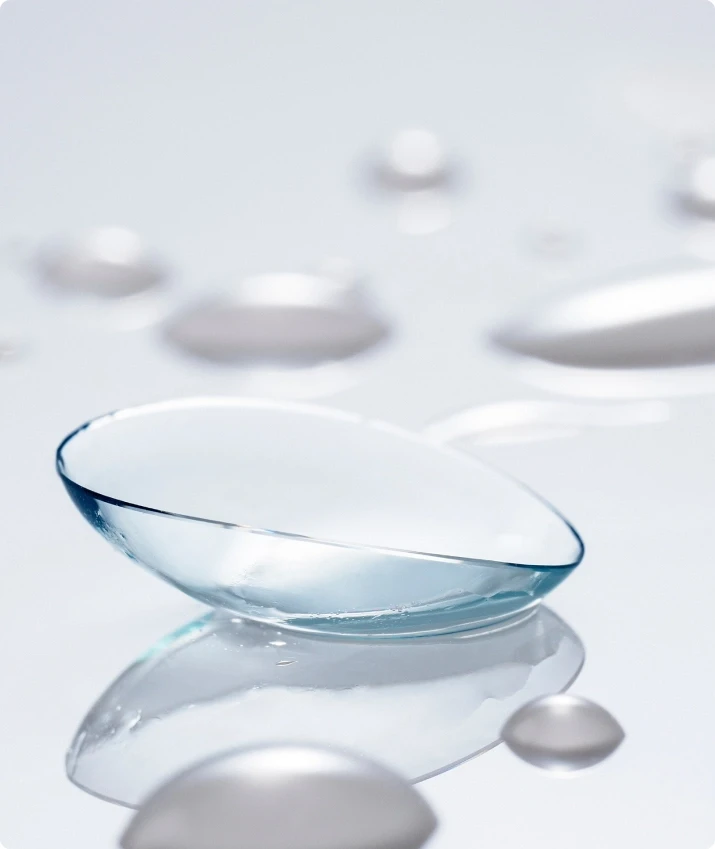
Features of Our Visian Implantable Contact Lens (ICL)
The Visian ICL is made of collamer, which is a polymer of collagen – a biocompatible substance that will have no adverse reaction to the eye. This also minimizes unnatural causes of dry eye syndrome, a common side effect of LASIK. Hence, you can be assured of safe, comfortable and discreet lenses that are invisible to the naked eye.
Unlike most other surgical vision correction methods, the Visian ICL is capable of correcting a wide range of refractive errors, including severe myopia (near-sightedness), hyperopia (far-sightedness) and astigmatism. Hence, this is a good alternative to LASIK, where the above conditions are likely to render you ineligible.
With the Visian ICL, you no longer have to worry about future changes in your vision conditions – simply remove the implanted lens and move on to your next treatment step! For those who like the idea of choice and reversibility, the ICL may be a better option for you.
As the name suggests, the Implantable Contact Lens (ICL) involves surgically implanting the contact lens into the eye; specifically behind the iris and in front of the natural crystalline lens. It does not touch any internal structures and is made to stay in position. Should you not see the need to have them removed in the future (in the event of vision changes), the ICL is a permanent and zero maintenance solution.

What to Expect During ICL Procedure?
ICL surgery is usually performed as an outpatient procedure, meaning you can typically return home on the same day. The procedure may be carried out under topical, local, or general anaesthesia, depending on your needs and your surgeon’s recommendation.
During the surgery, the implantable collamer lens (ICL) is inserted through a small incision and placed in the space just in front of the eye’s natural lens. The incision is very small and self-sealing, so stitches are usually not required.
In some cases, a laser procedure called laser peripheral iridotomy may be performed a few days or weeks before surgery. This creates one or two tiny openings in the iris (the coloured part of the eye) to help fluid circulate properly and reduce the risk of increased eye pressure after ICL implantation. However, this step is not required for most patients.
Recovery After ICL Surgery
Visual recovery after ICL surgery is typically rapid, although it is not immediate. Vision may appear slightly foggy right after the procedure, but it usually improves gradually over the next few hours. By the following day, most patients are able to see well, though resting for a few days before resuming normal activities is usually recommended.
After surgery, you will be prescribed antibiotic and steroid eye drops, as well as artificial tears to keep the eyes comfortable and moist. For most patients, both the procedure and recovery are generally smooth and well tolerated. Many people are able to return to work about a week after the surgery.
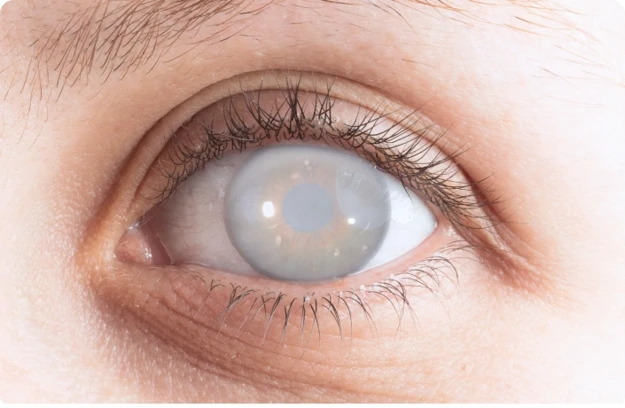
Potential Risks and Complications of Contact Lens Implant
Like any surgical procedure, implantable contact lens surgery carries potential risks. Your surgeon will discuss these and evaluate your suitability before treatment.
 Cataract formation riskGlaucomaEye Pressure IssuesPossible InfectionContact Lens Dislocation
FAQs on Implantable Contact Lenses (ICL)
It is a relatively straightforward procedure that is painless (you will be under local anaesthesia) and takes just about 15 minutes.
Due to the very small incision needed, the wound will heal on its own without the use of stitches. Don’t worry though – due to its minimally invasive nature and biocompatible material, recovery is relatively fast with minimal discomfort. Patients are often able to resume their daily activities comfortably within a few days.
ICLs are known for its ability to give patients with high degrees clear vision both in the day and night. In general, ICLs can treat myopia of up to 1,900 degrees; hyperopia of up to 600 degrees and astigmatism of up to 600 degrees.
Generally, it is recommended for people above the age of 18. There is no upper age limit for ICL as long as the patient’s eye condition is deemed suitable for the procedure.
One key benefit of the ICL is that it is much more hygienic than a normal contact lens, simply because it doesn’t require maintenance (daily proper rinsing, storing and re-insertion) and is designed to remain firmly in place inside the eye.
As the ICL is an elective, cosmetic treatment, the use of Medisave is not allowed. Private insurance generally do not cover this procedure either, though it is advisable to check with your insurer first.
Nonetheless, our clinic ensures that our prices are kept competitive and in line with industry standards. Do contact us if you require more information on cost and financing options.
The cost of implantable collamer lens (ICL) surgery can vary depending on several factors. These may include the type of lens used, such as standard EVO lenses or toric lenses designed to correct astigmatism, as well as the degree of myopia, hyperopia or astigmatism being treated. Other factors that may influence the overall cost include the technology used during the procedure, the surgeon’s expertise, facility fees and the post-surgery care and follow-up required.
ICL may be a suitable option for people with high myopia, especially if their prescription is too strong or their corneas are too thin for LASIK. Unlike LASIK, ICL does not reshape the cornea but places a lens inside the eye to correct vision. An eye assessment is needed to determine which procedure is most appropriate.
Implantable collamer lenses (ICL) are designed to provide long-term vision correction for conditions such as myopia and astigmatism. Many patients experience stable and clear vision for years after the procedure. Regular eye check-ups are recommended to monitor eye health and ensure the lens continues to function well over time.
ICL surgery is generally considered safe and has been widely performed for vision correction. As with any surgical procedure, there are potential risks, but careful patient selection and a thorough eye examination help ensure the treatment is appropriate. Your surgeon will discuss the potential benefits and risks before the procedure.