
Strabismus
Treatment & Surgeryin Singapore

which is why assessment and treatment should take into account the patient’s age, type of eye misalignment and individual visual needs.
What is Strabismus (squint)?
Strabismus, commonly known as squint, is a condition where the eyes are misaligned and do not point in the same direction at the same time. The misalignment may be constant or occur intermittently.

Sharp Vision Today!
- Misaligned and Point in Different Directions?
- Misaligned Only When Daydreaming or Tired?
- Misaligned When Trying to Focus to See Clearly?
- Having Double Vision, Causing You to Tilt Your Head to Focus?
Symptoms of Strabismus (Squint)
Strabismus may be noticeable all the time or only under certain circumstances, such as when a child is tired or daydreaming. Parents and caregivers may notice changes in how the eyes are aligned or how their child uses their vision.
Visible Signs
- Eyes that do not appear to be looking in the same direction at the same time
- Eyes that do not move together when looking at an object
- Frequent squinting or closing of one eye, particularly in bright sunlight
- Tilting or turning the head to look at something
Vision-Related Symptoms
- Double vision
- Difficulty judging depth or distance
- Eye strain or headaches
- Difficulty reading

Book an Appointment
Let our eye specialist and trained orthoptist conduct a detailed eye check to determine if you have strabismus or not, as well as its severity.
Early Intervention to Slow Progression
Left untreated, strabismus will lead to worsening vision and other conditions such as lazy eye. Hence, our prompt and personalized treatments will help realign your eyes properly and regain clear vision.
Clear Vision & Aligned Eyes
On top of vision issues caused by strabismus, the appearance of misaligned eyes can be distressing to patients as well. With the right treatment, you can fix both visual and appearance issues effectively all at one go.
The Main Types of Strabismus
Strabismus can be classified according to the direction in which the affected eye turns. Identifying the type of misalignment helps guide further assessment and treatment.
| Type | Eye Alignment |
|---|---|
| Esotropia (inward turn) | One or both eyes turn inward towards the nose. |
| Exotropia (outward turn) | One or both eyes turn outward, away from the nose. |
| Hypertropia (upward turn) | One eye is positioned higher than the other. |
| Hypotropia (downward turn) | One eye is positioned lower than the other. |
The eye misalignment may be constant, where it is present most or all of the time, or intermittent, where it appears only at certain times, such as when a child is tired or daydreaming.
Causes & Risk Factors of Strabismus
Strabismus can develop when the eyes do not work together to maintain normal alignment. In some cases, there may be no single identifiable cause.
Factors associated with strabismus include:
- Refractive errors: Uncorrected refractive errors, particularly farsightedness (hyperopia), can contribute to certain forms of childhood strabismus.
- Eye muscle or nerve problems: Problems affecting the muscles or nerves that control eye movement can lead to misalignment.
- Developmental or neurological conditions: Children with certain developmental or neurological conditions may have a higher risk of developing strabismus.
- Family history: Children with a family history of strabismus or amblyopia may have an increased risk.
- Premature birth: Children born prematurely have a higher risk of strabismus.
- Eye injury or other eye conditions: Trauma or conditions that affect vision in one eye may sometimes lead to eye misalignment.
How Is Strabismus Diagnosed?
A strabismus evaluation assesses how well the eyes see, move and work together. For children, concerns about eye alignment may be identified during an eye screening or noticed by parents and caregivers. The subsequent examination can then be adapted according to the child’s age and ability to respond to different tests.
The assessment may include:
- Visual acuity testing: To assess vision in each eye and check for amblyopia (lazy eye).
- Eye alignment and movement tests: To assess how the eyes are positioned and move together.
- Prism measurements: To measure the degree of eye misalignment.
- Refraction: To check for refractive errors such as farsightedness, short-sightedness or astigmatism.
- Depth perception testing: To assess how well both eyes work together.
- Dilated eye examination: To examine the internal structures of the eyes and check for other eye conditions.

Our Experience in Strabismus Treatment
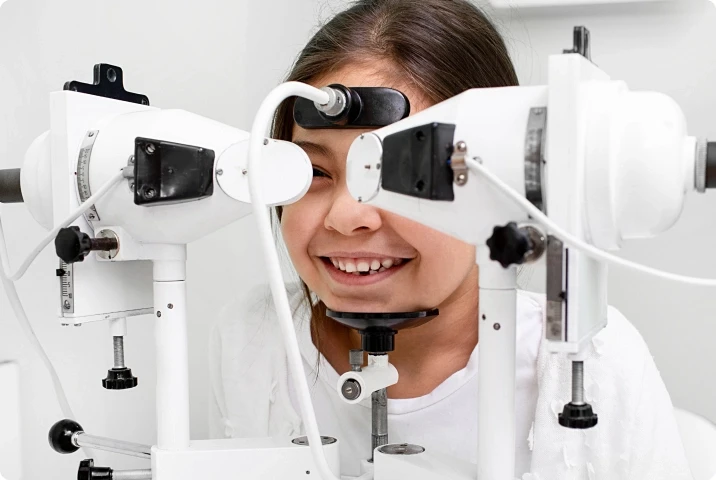
Our clinic provides assessment and treatment for strabismus in children and adults, with particular experience in managing childhood strabismus. Care is led by Dr Leo Seo Wei, an eye doctor in Singapore with experience in both paediatric and adult eye care.
As strabismus can vary in type, severity and its effects on visual development, each patient is assessed individually. Treatment is tailored according to the eye misalignment, visual needs and any associated conditions such as amblyopia (lazy eye).
Strabismus Treatment Options
Treatment for strabismus depends on factors such as the type and degree of eye misalignment, the child’s age, any underlying refractive error and whether amblyopia (lazy eye) is present. Depending on the assessment, treatment may involve one or a combination of the following approaches.

Glasses
Glasses may be prescribed when a refractive error contributes to the eye misalignment. In children with accommodative esotropia, for example, correcting farsightedness (hyperopia) can help reduce or, in some cases, correct the inward eye turn.
Amblyopia Treatment (Eye Patching)
If a child with strabismus also has amblyopia, patching the stronger eye may be recommended to encourage the weaker eye to develop better vision. Patching treats amblyopia rather than the eye misalignment itself.
Strabismus Surgery
Strabismus surgery may be considered when eye alignment cannot be adequately managed with non-surgical treatment or when the type of strabismus is more appropriately treated surgically. The procedure involves adjusting one or more of the muscles that control eye movement to improve alignment.
When Might Strabismus Surgery Be Recommended?
Strabismus surgery may be considered when:
- Eye misalignment persists despite appropriate non-surgical treatment
- The type or degree of strabismus is unlikely to be adequately corrected with non-surgical treatment
- Eye alignment is affecting how well the eyes work together
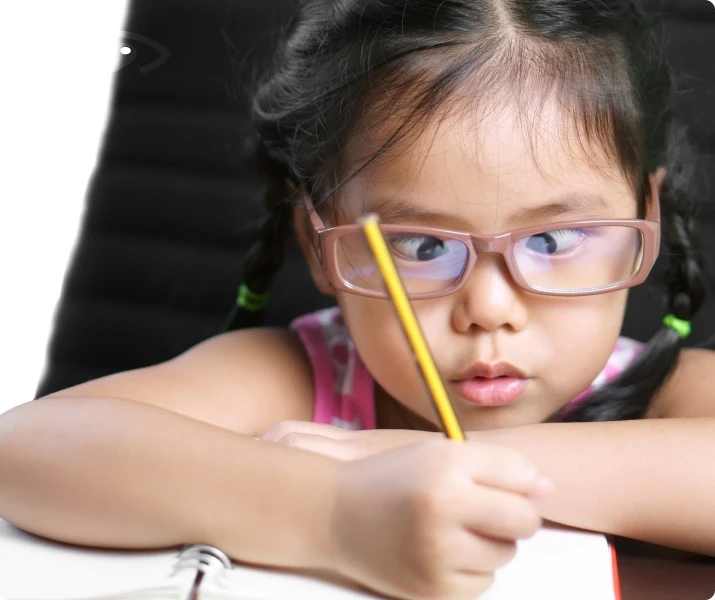
- An abnormal head position develops as the child tries to compensate for the misalignment
- Strabismus persists or develops in adulthood and surgery is considered appropriate
The decision to recommend surgery is based on the type of strabismus, degree of misalignment, visual development and individual needs of the patient.
What Happens During Strabismus Surgery?
Anaesthesia Is Administered
Strabismus surgery is usually performed under general anaesthesia, particularly in children.
The Eye Muscles Are Accessed
A small opening is made in the conjunctiva, the thin membrane covering the white part of the eye, to allow the surgeon to access the eye muscles.
The Eye Muscles Are Adjusted
Depending on the type of strabismus, one or more eye muscles may be repositioned, tightened or loosened to change their pull on the eye and improve alignment.
Sutures Are Placed
The adjusted muscles are secured in their new position with sutures. Absorbable sutures are commonly used and dissolve naturally as the eye heals.
The Conjunctiva Is Closed
The conjunctiva is repositioned over the surgical area and closed with absorbable sutures.

Preparing for Strabismus Surgery
Before strabismus surgery, your doctor will review your medical history and provide instructions to help prepare you for the procedure. For children, parents or caregivers may be asked to provide information about the child’s medical history and medications.
Parents should inform the doctor about:
- Any existing medical conditions or allergies
- Any previous reactions to medications or anaesthesia
- Medications, supplements or herbal remedies the child is taking
- Any history of bleeding or clotting problems
- Any illness that develops in the days leading up to surgery
You will also be given fasting instructions before surgery. These should be followed carefully to ensure the procedure can be carried out safely under anaesthesia.
What to Expect After Strabismus Surgery?
Most patients can return home on the same day after strabismus surgery. Some temporary symptoms are expected while the eye heals.
Common Post-Surgery Symptoms
- Redness of the eye, which may persist for several weeks
- Mild discomfort, irritation or a gritty sensation
- Small amounts of blood-stained tears or crusting around the eye
- Temporary double vision in some patients
Post-Surgery Care
- Use prescribed eye drops or medication as directed
- Avoid rubbing the eyes during the healing period
- Follow your doctor’s advice on bathing, swimming, sports and other activities
- Contact the clinic if there is increasing pain, swelling, discharge or an unexpected change in vision
Follow-Up Care
Follow-up appointments allow the doctor to monitor healing and assess eye alignment after surgery. Further treatment or monitoring may be recommended depending on the patient’s age, vision, eye alignment and recovery.

What Can Happen If Strabismus Is Left Untreated?
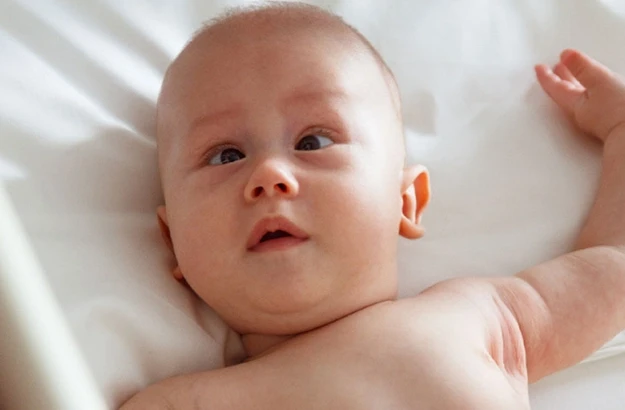
The effects of untreated strabismus vary depending on the type of misalignment, the patient’s age and how vision and binocular function are affected. In children, persistent strabismus may interfere with normal visual development and can lead to amblyopia (lazy eye). In adults, newly developed or persistent strabismus may cause double vision, visual discomfort or difficulty using both eyes together.
Depending on the individual, persistent strabismus may also be associated with:
- Amblyopia (lazy eye): In children, the brain may increasingly rely on the better-seeing eye, preventing normal vision from developing in the misaligned eye.
- Reduced depth perception: Poor coordination between the eyes can affect stereoscopic or 3D vision.
- Abnormal head posture: Some people may tilt or turn their head to compensate for the eye misalignment.
- Double vision: This is more common when strabismus develops later in childhood or adulthood.
- Social or emotional concerns: Visible eye misalignment may affect confidence or social interactions for some people.
FAQs on Strabismus & Strabismus Treatment
When both eyes are aligned, the brain combines the images from each eye to support clear vision and depth perception. If one eye is misaligned, a child’s developing brain may begin to ignore its image, which can affect depth perception and visual development.
When people develop strabismus in adulthood, they tend to develop double vision instead, because their brains have already learned to receive images from both eyes and are not able to ignore the image transmitted from the misaligned eye. Young children often do not see double vision, they tend to lose depth perception instead.
Strabismus may be associated with conditions such as cerebral palsy, Down syndrome, hydrocephalus and brain tumours. Premature birth may also increase the risk of developing strabismus.
Strabismus usually does not resolve on its own. Early assessment and treatment are important, particularly while a child’s vision is still developing. It is never too late to restore normal alignment to the eyes!
Strabismus surgery is typically performed as a day procedure and involves adjusting the eye muscles to improve alignment. Surgery is not always necessary, as some cases may be managed with treatments such as glasses or eye patching.
Strabismus cannot always be prevented, as it may be related to factors such as genetics, underlying eye conditions, or how the eye muscles and brain coordinate eye movements. However, regular eye examinations can help detect early signs of misalignment and allow timely treatment to reduce the risk of vision problems.
The cost of strabismus surgery can vary depending on several factors, including the complexity of the condition, the number of eye muscles involved, and whether the procedure is performed in a private hospital or surgical centre. A detailed assessment by the ophthalmologist will help determine the most appropriate treatment plan and provide a clearer estimate of the expected costs.
Our Strabismus Specialist

Dr Leo Seo Wei
Senior Consultant Ophthalmologist
MBBS (NUS), MRCS (Edin), MMed (Ophth) (NUS), FRCS (Edin) (Ophth), FAMS (Ophth)
Dr Leo Seo Wei is a senior consultant ophthalmologist with over two decades of clinical experience. She completed fellowship training in Paediatric Ophthalmology and Strabismus at the W.K. Kellogg Eye Center, University of Michigan, and further training in the same subspecialty at Cedars-Sinai Medical Center in the United States.
Dr Leo previously served as Head of the Paediatric Ophthalmology and Strabismus Service at the National Healthcare Group Eye Institute. She assesses and treats strabismus in both children and adults, with treatment tailored to the type of eye misalignment, visual development and individual needs of each patient.